
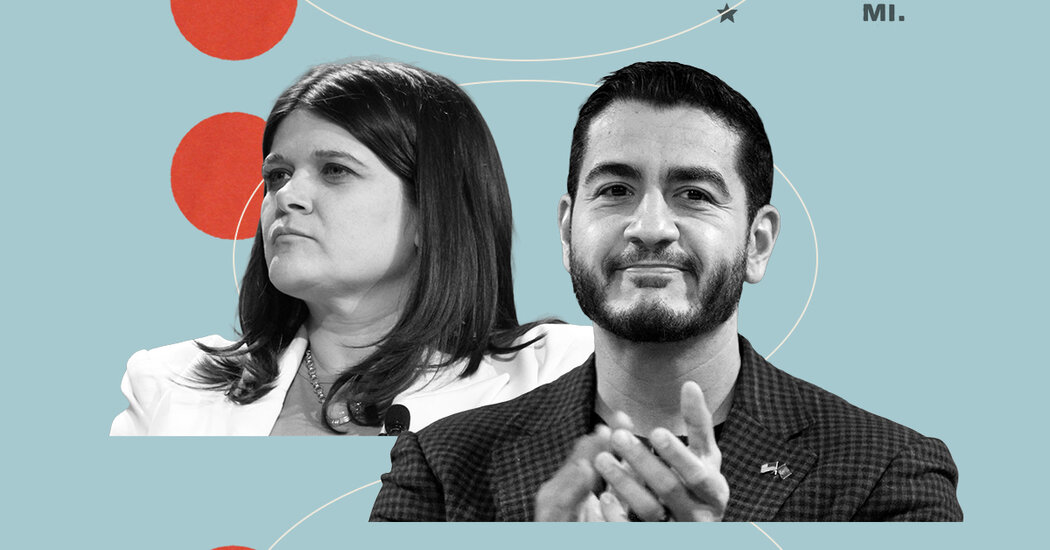
The Choice Michigan Democratic Primary for Senator The Senate candidates represent different directions for the future of the Democratic Party at a pivotal moment for Michigan.The Candidates Abdul El-Sayed The former public health official has been running a populist, progressive campaign. Haley Stevens The moderate representative has argued for a practical approach to politics. Times Opinion brought together a panel of local leaders and experts to help make sense of the race. Michigan is home to one of the most watched Senate races in the country this year, one that will help decide control of Congress and shape the future of the Democratic Party.The two candidates — Abdul El-Sayed, a former public health official, and Haley Stevens, a member of Congress — are both millennials, but offer deep differences in ideology and style.The state itself faces profound issues and divided voters. Israel’s wars in Gaza and Lebanon have personally affected many in a state that is home to some of the largest Arab American communities in the United States; the politics of the conflicts permeate this race. A ferocious backlash against data centers and artificial intelligence cuts across party and region, from Detroit to more rural communities. The state’s economy still emphasizes heavy manufacturing, even as personal income stagnates and younger residents leave for other states, making for a complex problem to solve. And of course President Trump and his administration loom over so much of politics and policy today.How would Dr. El-Sayed and Ms. Stevens deal with these issues and represent Michigan? How their messages are resonating in this battleground state could illuminate future elections, especially as the progressive left tries to gain more ground in American politics.Times Opinion assembled a panel of experts with a range of viewpoints for a new installment of The Choice, aimed at guiding Michigan voters through the core issues in this election.The Choice was prepared by Times Opinion editors, based in part on a round-table conversation with the panelists held on June 29 (before a third candidate, Mallory McMorrow, suspended her campaign). The project is also based on a survey from which Times Opinion averaged the panelists’ responses; one panelist, Richard Czuba, declined to participate in the survey.Our Panel’s Ratings We asked panelists to rate the leading candidates on how they would approach governing. Each chart reflects an average of their individual ratings. The Candidates Times Opinion In the past year, we’ve seen populist candidates succeeding with anti-corporate, anti-establishment sentiment. Does that have limits in Michigan, or is that where the electorate is? What’s driving that, if it is the case?Kaitlyn Buss Columnist and editor from Detroit Michigan is ready for change. It’s surprising to me how much there is an appetite for a different kind of candidate, given we just had a Senate race two years ago where a more establishment-type candidate won.Jeremy Allen Executive editor of The Michigan Chronicle I think part of the reason that people want that change is not necessarily because politicians have done them a disservice here in Michigan, but I think there’s often this hand-in-hand desire to have change when things just aren’t going well economically.Lisa Wozniak Great Lakes conservation and climate leader There’s a pretty significant number of people that are still in the undecided camp on this. They have been feeling that politicians are not delivering for them. And so they’re frustrated. They’re distrustful of both parties right now. And they’re tired of hearing candidates who come around every two to four years and talk about big things, whether it’s skyrocketing grocery bills, the price of eggs, energy costs, gas prices now, when neither party has really delivered real change for them. And so I think they’re looking for someone who, yes, is a change candidate, but also seems reasonable and rational and not pie in t
Fuente: NYT — Ver nota original