
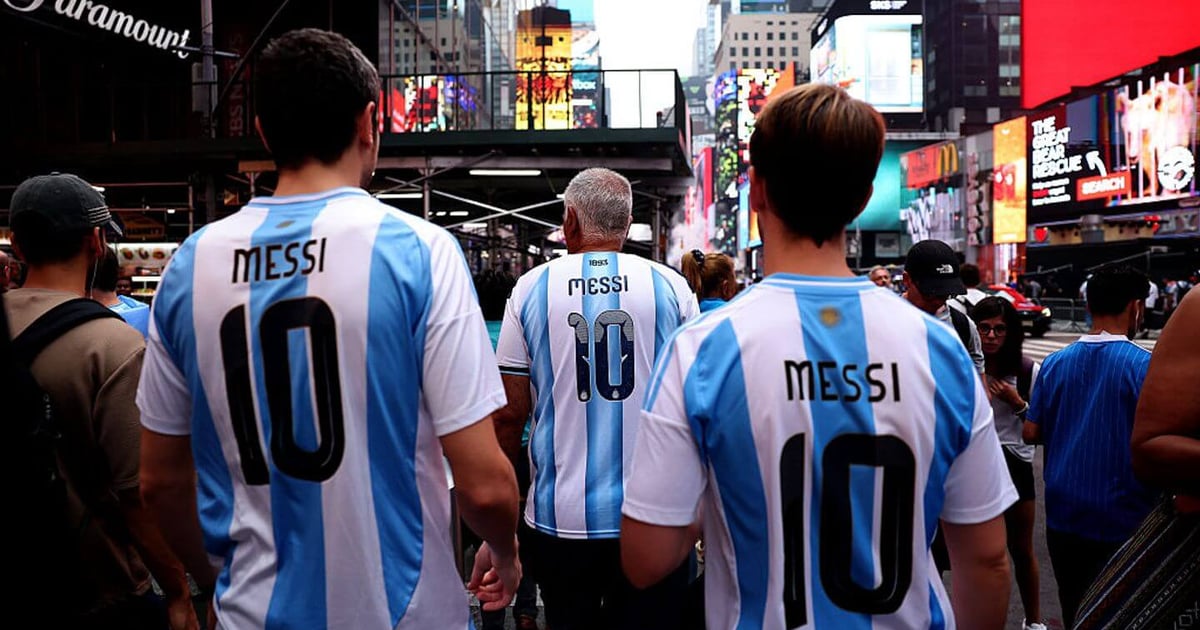
Advertisement live Updated 1m ago The 2026 World Cup winners will be crowned today at MetLife Stadium in East Rutherford, New Jersey. Spain and Argentina meet in the final, bringing the curtain down on a 104-match tournament staged across North America. Follow our live coverage for all the latest news, updates and analysis from our team of writers. Alejandro Grimaldo is a tenacious, technically accomplished left-back and a set-piece specialist. He could provide an important delivery if Marc Cucurella is booked early or Spain need greater attacking threat from that position. Mikel Merino’s habit of making an impact from the bench is well documented, while Barcelona midfielder Gavi could also have a role after several injury-disrupted seasons. Liverpool winger Victor Munoz offers unpredictability, while striker Borja Iglesias provides experience and a physical presence. The 33-year-old was prolific for Celta Vigo and previously refused to represent Spain while Luis Rubiales remained president of the Spanish football federation. Rubiales had kissed Jenni Hermoso without her consent after Spain won the 2023 Women’s World Cup and initially refused to resign. Rubiales later stepped down and was found guilty of sexual assault and fined. Iglesias subsequently returned to the national team. The experienced Nicolas Otamendi, 38, remains a threat at set pieces and could be called upon if Cristian Romero or Lisandro Martinez encounters difficulties. Thiago Almada has lost his place in midfield but remains a creative option, while 21-year-old Nico Paz could thrive if given a cameo. Striker Jose Manuel Lopez has been prolific for Brazilian side Palmeiras but is unlikely to feature, with Lautaro Martinez and Julian Alvarez ahead of him in the pecking order. Argentina have several players who are stars at club level, including Julian Alvarez and Lautaro Martinez, but nobody has displaced Lionel Messi as the team’s leading figure. Messi continues to deliver on the biggest occasions, creating and scoring decisive goals. Even when Argentina’s goals come from elsewhere, he is so often involved in their construction. If anyone can rival his importance, it is goalkeeper Emiliano Martinez. But even his match-defining saves tend to be overshadowed by Messi’s contributions at the other end. We do not know whether this will be Lionel Messi’s final World Cup appearance, but time is clearly against him. Croatia’s Luka Modric and Portugal’s Cristiano Ronaldo are among the other great players who may have made their final appearances at the tournament. It seems almost impossible that Messi would return in 2030, when he would be 43, but he has spent his career defying the usual expectations and conventions. Combativeness, a refusal to accept defeat and, of course, Lionel Messi. Lionel Scaloni’s side have laboured through long stretches of matches before coming alive late on, with 12 of their 19 goals arriving after the 75th minute of normal time. Sit off them, as England fatally did late in the semi-final, and they possess enough midfield quality to circulate the ball comfortably and create a steady stream of chances. Their tournament-high average of 5.4 passes per possession sequence reflects that patience and composure. Those combinations are concentrated through the middle, where Messi generally operates. Argentina have directed a smaller proportion of their passes towards the flanks than any other team at the tournament. Control, cohesion and dogged intensity without the ball. Spain’s identity as a possession-dominant, short-passing side is well established. They have remained true to those principles throughout this tournament, averaging 63.7 per cent possession across their seven matches. That dominance is physically and mentally exhausting for opponents, who are left chasing shadows as Spain’s technicians pass around them with precision. But their approach is not simply about grinding teams down and waiting for gaps to appear. Spain’s movement is dyn
Fuente: NYT — Ver nota original