
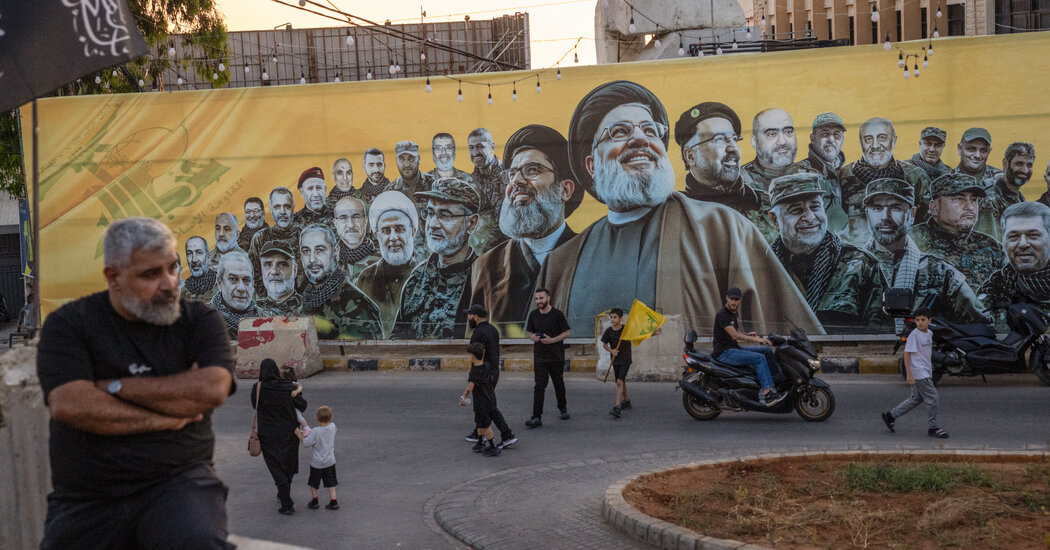
AdvertisementSKIP ADVERTISEMENTYou have a preview view of this article while we are checking your access. When we have confirmed access, the full article content will load. The preliminary agreement between Iran and the United States had barely come into effect when it all nearly unraveled on Friday. And, for the second time in recent weeks, the issue that threatened to derail it was Lebanon.The conflict in Lebanon, once seen as a secondary front to the American-Israeli war on Iran, has become one of the main obstacles to ending it. That dynamic came into sharp focus on Friday, after fighting between the Iran-backed militant group Hezbollah and Israel intensified and a new round of talks between Tehran and Washington in Switzerland was subsequently scuttled.While neither side gave a reason for the postponement, three diplomats who spoke on the condition of anonymity to discuss sensitive details said that Iran had withdrawn from the talks because of Israeli strikes in Lebanon.“Iran’s new leadership views Lebanon as part and parcel of its own national security, as previous Israeli advances against Hezbollah in 2024 paved the way for a direct conflict with Iran,” said Mohanad Hage Ali, a senior fellow at the Carnegie Middle East Center in Beirut. “For Iran, the end game is an Israeli withdrawal from Lebanon.” The diplomatic breakdown on Friday was the second time in recent weeks that the conflict in Lebanon has upended talks between the United States and Iran. Earlier this month, Israeli strikes on the outskirts of the Lebanese capital, Beirut, prompted Iran to launch missiles toward Israel and Israel to respond with its own wave of strikes across Iran.The breakdown came days after the United States and Iran signed a preliminary agreement to end their own war that calls for “the immediate and permanent termination of military operations” in Lebanon and pledges to safeguard the country’s “territorial integrity and sovereignty.” Thank you for your patience while we verif
Fuente: NYT — Ver nota original